

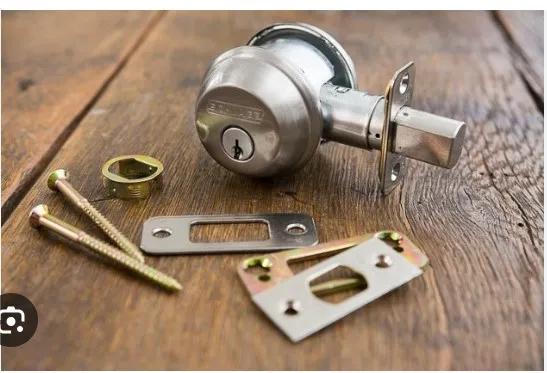
Why a Deadbolt Alone Won't Stop a Forced
Why a Deadbolt Alone Won't Stop a Forced Entry in 2026
Most homeowners sleep at night believing their deadbolt is doing the heavy lifting. It's a reasonable assumption — deadbolts have been the gold standard of residential security for decades. But in 2026, relying on a deadbolt alone is one of the most common and dangerous security mistakes a homeowner can make.
The hard truth is this: a determined intruder doesn't need to pick your lock. They just need 10 seconds and a boot.
The Reality of Forced Entry Today
According to security industry data, the overwhelming majority of home break-ins don't involve lock picking or sophisticated bypass techniques. Burglars kick doors in. They smash windows. They pry frames apart. A deadbolt, no matter how expensive or high-grade, only secures the lock cylinder itself. It does nothing to reinforce the door frame, the hinges, the surrounding wall, or — critically — your windows.
A Grade 1 ANSI deadbolt, the highest residential rating available, can withstand significant torque. But it's only as strong as the wood frame it's anchored in. A single solid kick at the right angle transfers force directly to the door jamb, which on most homes is held in place by half-inch screws sunk into soft wood. The lock doesn't break. The frame does.
That's the gap in most home security plans: people invest in the lock and forget everything around it.
What Burglars Actually Target in 2026
Tactics have shifted. As smart locks, video doorbells, and alarm systems have become more common, opportunistic intruders have adapted. They now look for the path of least resistance, and increasingly, that path is the window.
Ground-floor windows, basement windows, and garage side-entry windows are now among the top points of entry in residential break-ins. Glass is faster to breach than a reinforced door, it's quieter than most people assume, and it bypasses every lock you've ever installed on your front door entirely.
This is why whole-home security thinking has replaced the old "just get a good deadbolt" mentality. If your front door is a fortress but your side windows are unprotected, you haven't secured your home — you've redirected the threat.
Layered Security: The Only Approach That Works
Professional security consultants consistently recommend a layered approach. No single device or hardware solution stops every threat. What stops most threats is making your home a harder, slower, louder, more visible target than the next one.
Layers typically include:
A reinforced door frame with longer strike plate screws — this alone significantly improves kick resistance. Door barricade bars or security bars placed at floor level add a second mechanical obstacle even if the frame gives. Alarm systems and motion-triggered lighting handle deterrence and alerting. And critically, window security bars close the window vulnerability that deadbolts can't address at all.
GTA Security Bars works with homeowners across the Greater Toronto Area to assess exactly these kinds of gaps. The most common finding isn't a bad lock — it's an exposed window that no one has ever thought twice about.
Why Windows Are Your Weakest Point Right Now
A standard residential window offers almost no resistance to forced entry. Laminated glass helps, but most homes still have standard single or double-pane glass that can be cleared in seconds. Window locks — the simple latches built into frames — are designed to keep windows closed against wind, not to resist deliberate force.
Window security bars, properly installed, change that equation entirely. They don't just slow a break-in attempt — they make it practically impossible without tools and significant noise and time, all of which are things burglars actively avoid. Modern designs have moved well past the institutional look of older bar systems; today's options are low-profile, powder-coated, and designed to complement a home's exterior rather than make it look like a cell block.
For anyone serious about whole-home security in 2026, addressing window vulnerability isn't optional — it's foundational.
The Deadbolt Still Matters — Just Not Alone
None of this means deadbolts are useless. A high-quality deadbolt on a reinforced frame is still a critical component of a secure entry. The problem is treating it as the whole solution rather than one piece of a larger system.
Think of home security the way you'd think of waterproofing a basement. Sealing one crack while ignoring the others doesn't keep the water out — it just redirects where it comes in. Every unprotected point of entry is a potential breach, and a deadbolt has no jurisdiction over your windows, your sliding door, or your basement casements.
The homes that don't get broken into are the ones that present a complete obstacle, not just a good front door. Combining a solid deadbolt with frame reinforcement, alarm coverage, motion lighting, and proper window security — that's what whole-home security looks like in practice.
If you haven't looked at your home through the eyes of someone trying to get in, now is the time. GTA Security Bars offers assessments and installations specifically designed to close the gaps that locks alone can't cover.
Frequently Asked Questions
Q1: Can a deadbolt be kicked in even if it's a high-quality lock?
Yes. The lock itself rarely fails — the door frame does. Most residential door frames are held together by short screws in soft wood, and a forceful kick transfers energy directly to the jamb, not the bolt. Upgrading your strike plate with 3-inch screws and a reinforced plate dramatically improves kick resistance, but the window vulnerability remains entirely separate from this issue.
Q2: Are window security bars safe in case of a fire or emergency?
Modern window security bars are designed with safety as a primary consideration. Most residential installations include quick-release mechanisms that allow occupants to open the bars from the inside in an emergency. It's important to choose bars that meet local fire code requirements and to ensure all household members know how to operate the release. A reputable installer will walk you through this as part of the installation.
Q3: Do window bars work on all window types?
Window security bars can be fitted to most standard window types including single-hung, double-hung, sliding, and casement windows. Basement windows, which are a particularly high-risk entry point, are one of the most common installation scenarios. Custom fabrication is available for non-standard sizes. The key is having bars measured and installed to fit the specific frame rather than using one-size-fits-all products.
Q4: Will window security bars affect my home's appearance?
Significantly less than they used to. Today's security bars are available in powder-coated finishes — black, white, bronze, and custom colours — and in slimmer profiles that integrate with a home's exterior far more cleanly than older institutional designs. Many homeowners find that well-installed bars blend naturally with their windows and are barely noticeable from the street.
Q5: How do I know which entry points in my home are most at risk?
A proper security assessment looks at every potential entry point: all exterior doors and their frames, ground-floor windows, basement windows, sliding patio doors, and garage entries. Common high-risk factors include windows obscured by landscaping (which give intruders cover), basement windows below grade, and any entry point not visible from the street or neighbouring properties. GTA Security Bars provides on-site assessments to identify exactly these vulnerabilities and recommend targeted solutions rather than one-size-fits-all installations.