

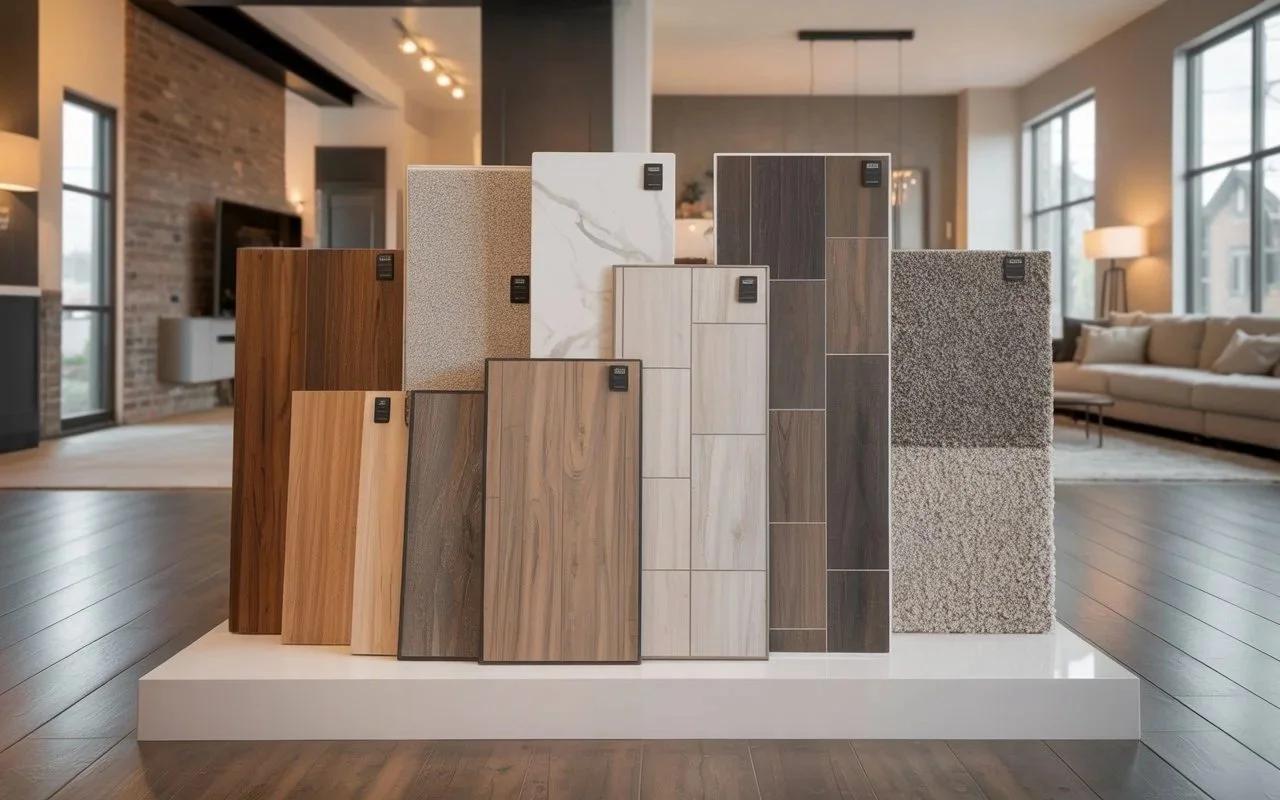
Choosing Flooring Built for Calgary
Choosing Flooring Built for Calgary: Cold Slabs, Dry Winters, and Heavy Foot Traffic
Flooring that performs beautifully in a mild, humid climate can quietly misbehave in Calgary. Our winters are long and bone-dry, our chinooks swing indoor humidity around, and a lot of our living space sits on cold concrete slabs. A floor chosen for looks alone can gap, cup, or feel miserably cold underfoot once it meets those conditions. Getting flooring installation Calgary right means matching the material to the room, the subfloor, and the climate, not just the colour swatch.
Envirotech Renovation spends as much time talking to homeowners about where a floor is going as about how it looks, because that is what decides whether it still performs years from now.
What Calgary's Climate Does to Flooring
Two forces matter most here: temperature and humidity. Cold slabs pull warmth out of any floor laid directly on them, and our dry winter air shrinks natural materials while a humid stretch swells them back. Solid hardwood, which thrives in stable humidity, can develop gaps and cupping when the air cycles between bone-dry and damp. That does not rule it out, but it does mean installation and acclimatization have to account for our swings rather than ignore them.
Matching Material to the Room
Basements and Slab-On-Grade Rooms
Below grade and over concrete, moisture and cold are the deciding factors. Luxury vinyl plank is a popular, forgiving choice because it tolerates moisture and temperature shifts well and feels warmer than tile underfoot. Tile is outstanding for durability and pairs perfectly with in-floor heat, which is often the right answer for a cold slab. When we plan a finished basement, the flooring decision is made alongside the insulation and heating plan, not after, because they depend on each other.
High-Traffic Main Floors
Entryways, kitchens, and hallways take abuse from boots, grit, and pets. Here the priority is a hard-wearing surface that resists scratching and moisture. Durable LVP and quality tile both excel, while engineered hardwood offers the warmth of real wood with more dimensional stability than solid planks in our dry climate.
Bathrooms and Wet Areas
Water resistance wins. Tile remains the benchmark for bathrooms, and proper tile installation with correct waterproofing and substrate preparation is what separates a floor that lasts from one that fails at the grout lines. The material is only as good as what goes underneath it.
The Subfloor Decides Everything
Homeowners fixate on the visible surface, but the subfloor is where success or failure is built. A floor over a cold, uninsulated slab needs a moisture break and often an insulating layer to stay comfortable and stable. An uneven subfloor telegraphs every dip and ridge into the finished floor. Rushing or skipping subfloor preparation is the most common reason a good material underperforms. Professional flooring installation treats the subfloor as half the job, because in practice it is.
Comfort Underfoot in a Cold Climate
Warmth is not only about the furnace. In-floor heating under tile turns the coldest material into the cosiest floor in the house. Where in-floor heat is not practical, a subfloor system with a thermal break, or warmer-feeling materials like LVP and engineered wood, keeps bare feet happy through a Calgary January. Planning for this up front is far easier than wishing for it later.
Frequently Asked Questions
What is the best flooring for a Calgary basement? Luxury vinyl plank and tile are the strongest choices because they handle moisture and cold slabs well. Tile paired with in-floor heating is ideal for comfort, while LVP is forgiving and warmer underfoot than bare tile.
Will hardwood survive Calgary's dry winters? It can, but solid hardwood is sensitive to our humidity swings and may gap or cup if not installed and acclimatized correctly. Engineered hardwood is more dimensionally stable and often the safer choice in this climate.
Why does my floor feel so cold even when the house is warm? Because it is likely laid over an uninsulated slab that pulls heat away. A thermal break in the subfloor, warmer-feeling materials, or in-floor heating all solve this far better than turning up the thermostat.
How important is subfloor preparation? It is roughly half the job. Moisture control, insulation over slabs, and a flat, sound subfloor determine whether even premium flooring performs. Most flooring failures trace back to what was underneath, not the material itself.
Can I add in-floor heating under tile later? It is far simpler to install while the floor is open during a renovation. Retrofitting it later usually means pulling up finished flooring, so it is best decided during planning.
Choose for the Climate, Not Just the Catalogue
The right floor for Calgary is the one chosen with the slab, the humidity, and the traffic in mind, installed over a subfloor prepared to handle all three. Get those decisions right and a floor looks good and performs for decades. If you are planning new flooring this season, talk to our team at Envirotech Renovation about matching the material to your rooms and Calgary's conditions.